From the editor

It’s Spring and exciting times for HAS and its members.
We’ve noticed many more members signing in to the website recently, creating their own profiles, and enjoying our online newsletter and blog. With the addition of the new forum section, we’re confident you’ll be visiting the site more often.
The forum is a great place to connect with fellow HAS members, discuss any topics you like, and share photos—maybe even a few fun ones! It’s over to you to make the most of this new feature. Why not say hello or comment on a post today?
If you know any members who haven’t yet signed up for a personal HAS account, give them a friendly nudge.
This month, we have another superb “Photographer of the Month” article, a Social Events update, some rather lovely members’ pictures in our regular “Through the Lens” gallery, plus articles from John (“Pour Decisions”) and Jayne (“The Bedroom Bookshelf”)
Happy reading,
Kevin
Social events
Camera Club - f-stop fun!
Mark and Fe have come up with a great idea for an event in May or June, which has the potential to be a lot of fun.
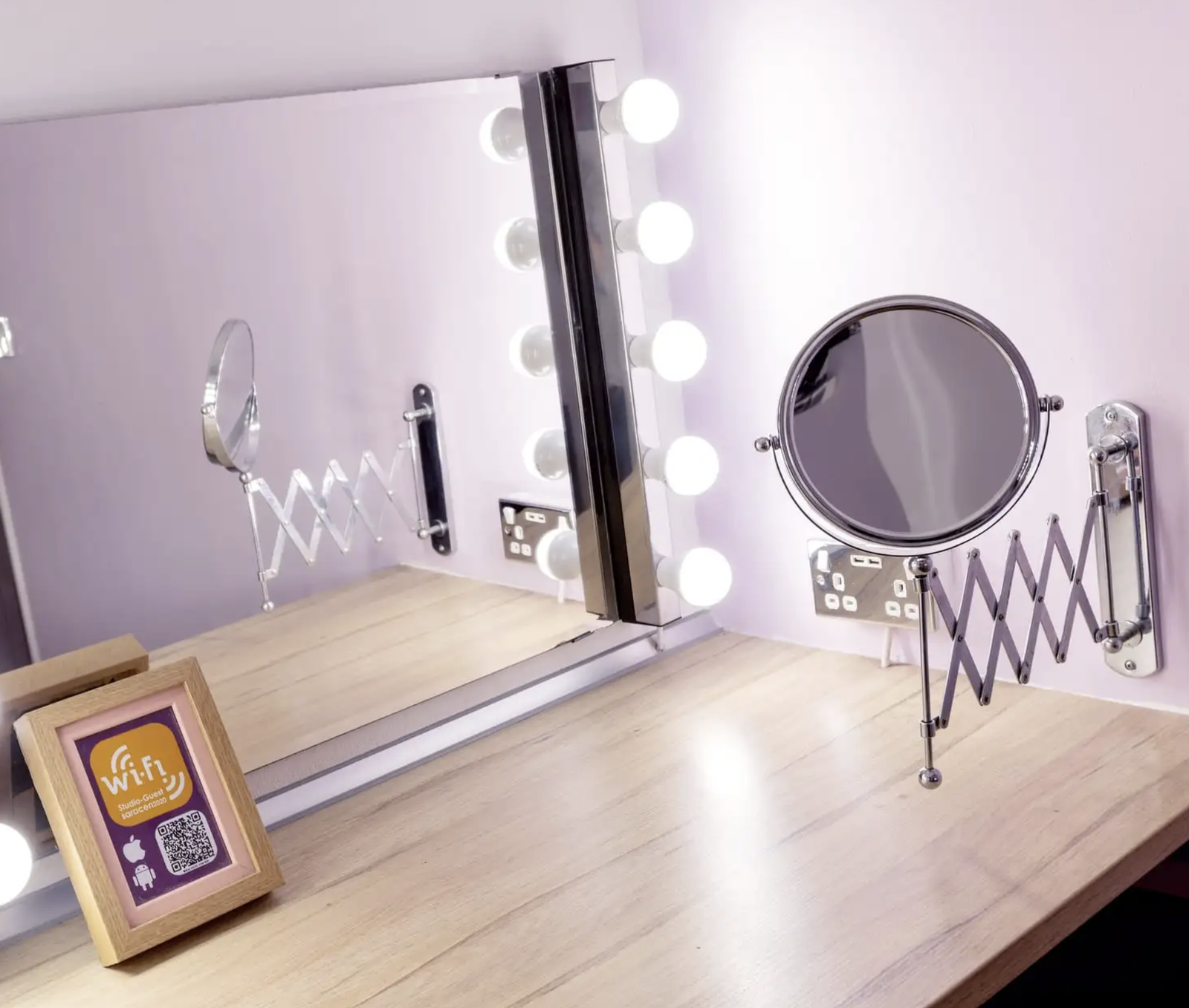
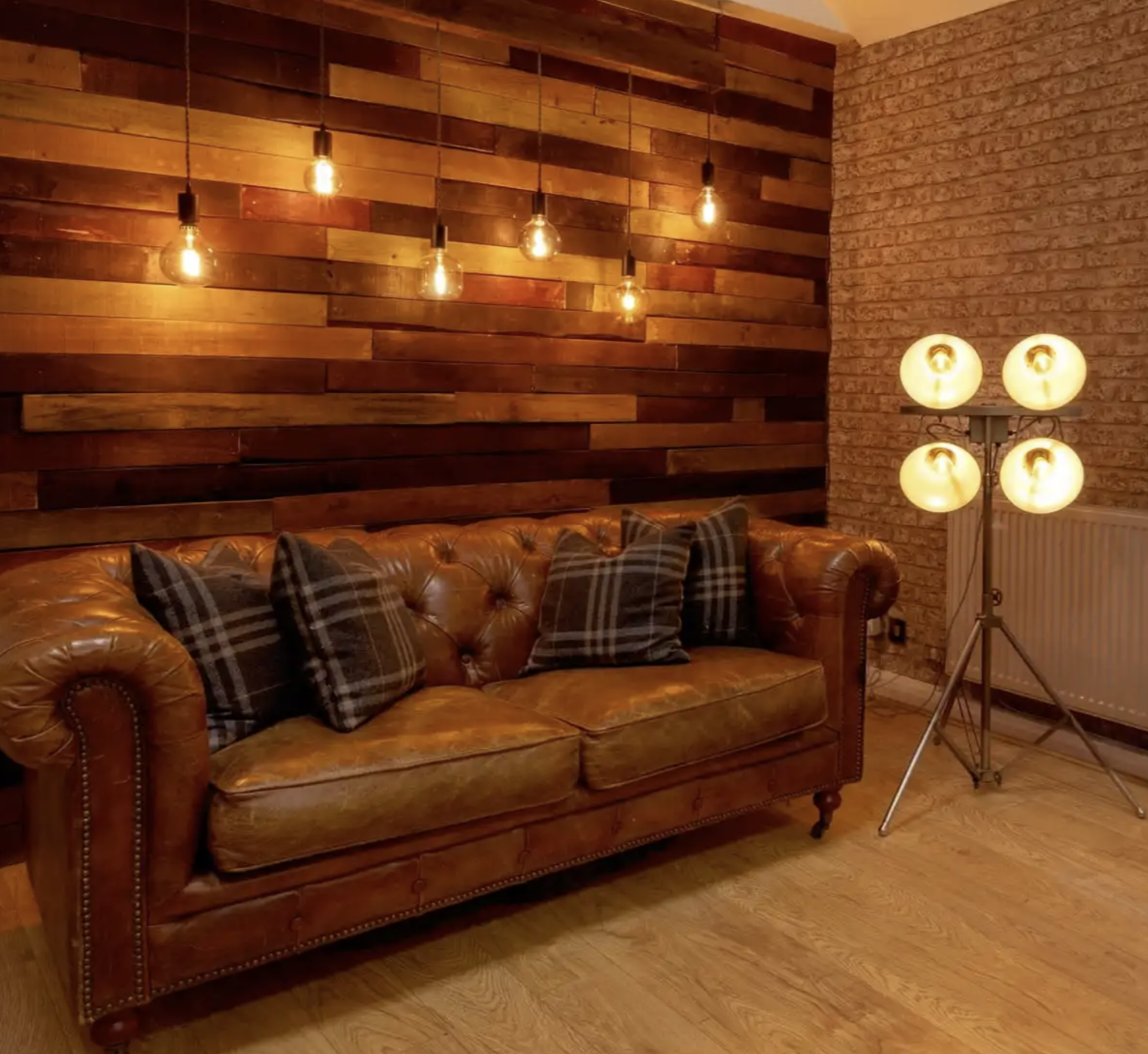
They have proposed hiring Saracen House Studio near Milton Keynes for a day – it comes complete with lights, reflectors, backdrops, central heating and refreshments!
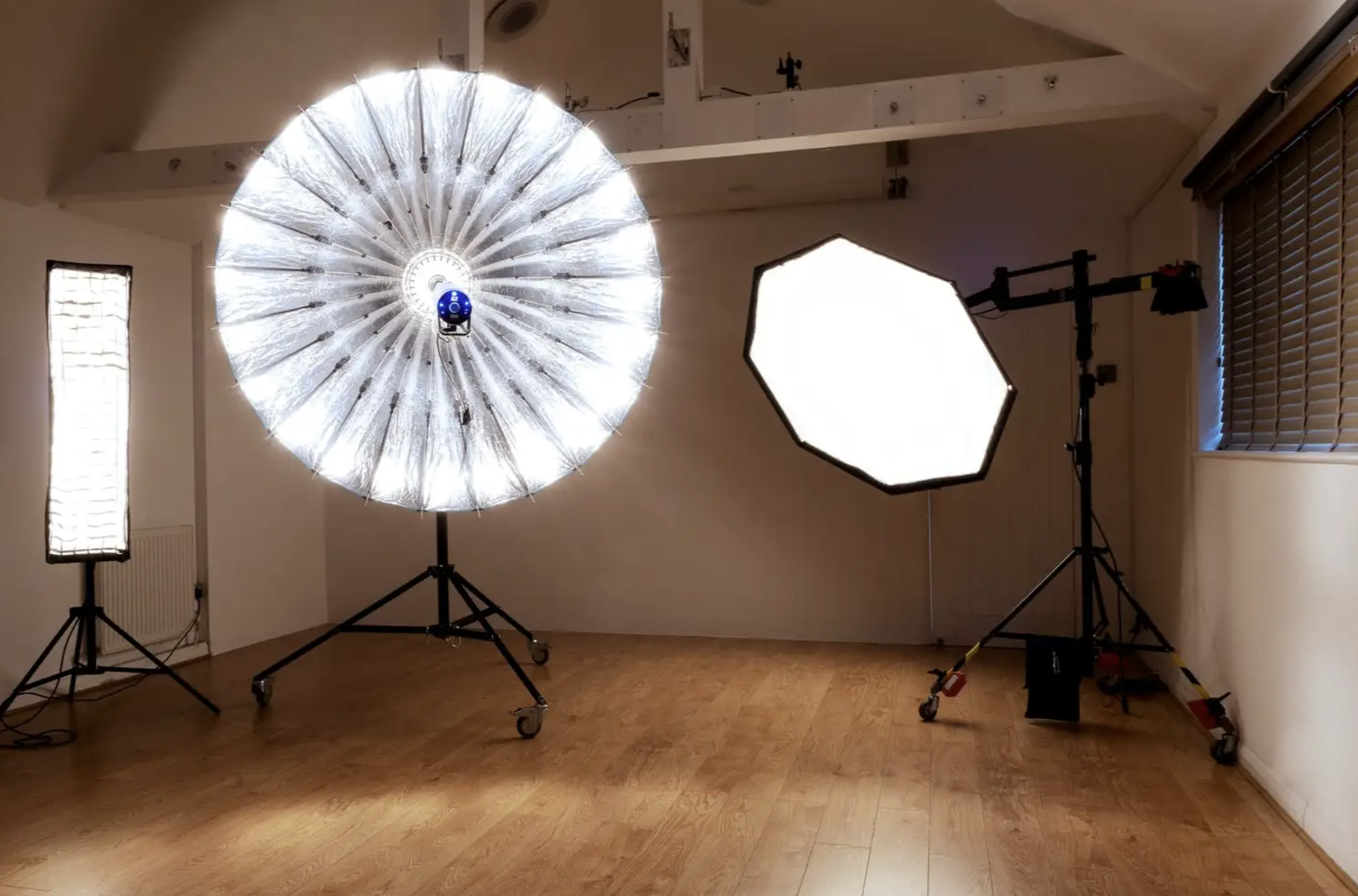
There are many couples in the group who enjoy taking photographs – us included – and this would be an opportunity to explore photography in a professional studio.
There is a lot of equipment included in the hire for those interested in playing with different lighting setups etc – realistically you’d need a DSLR with hot shoe mount to make the most of that (although for those who are possessed of interest and enthusiasm but no equipment, we have a couple of decent cameras available to borrow for the day).
The idea is to capture some of the vibe we experienced at last year’s Christmas Party, in particular the now legendary “Saturday afternoon” slot, an afternoon of fun, fizz, nibbles – and a lot of photographs!
First and foremost this is a social event – a “bring a camera” party, with no expectations, no pressure. Come and do your own thing – share if you want, dress how you please. Whether wanting to channel your inner Cecil Beaton, photographing your muse in ball gown and tiara; Bunny Yeager snapping Bettie Page in leopard print; or just you, a camera and the love of your life – you’d be very welcome.
Cost to hire the entire studio for the day, including equipment, is modest – split between half a dozen couples, it would be around £40 per couple.
For those who’d like to make a weekend of it, the plan would be to stay at a local hotel, with dinner in the evening.
We think it’s a great idea (and plan on being there, so that’s four of us going already!). Numbers will be limited and available dates are booking up fast, so early expressions of interest would be warmly welcomed to get this new event off the ground.
In the first instance, please contact Mark and Fe at fnm4fun@yahoo.com.
Through the lens
pictures from our members
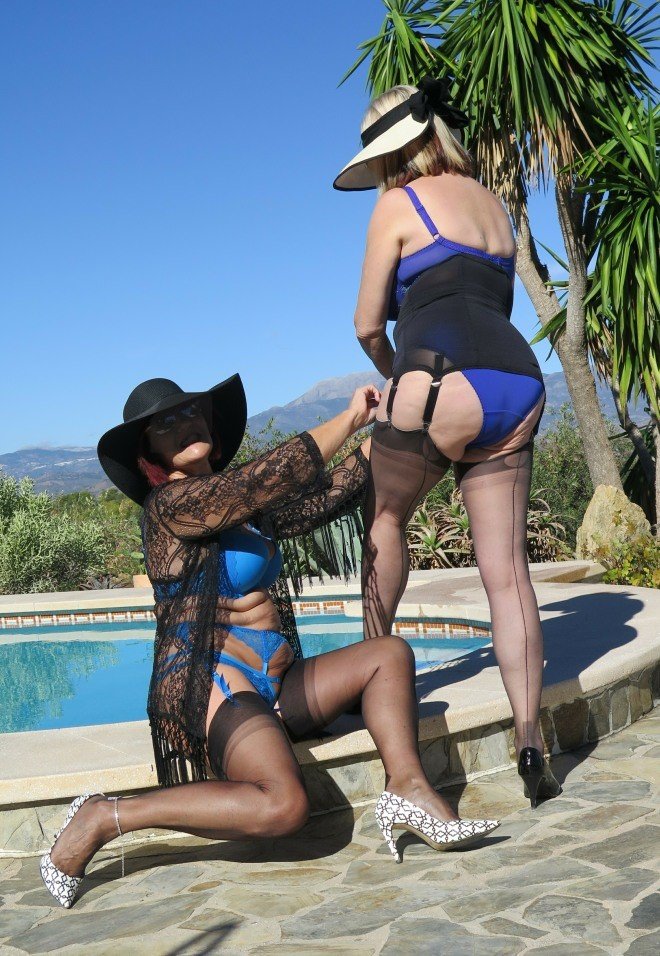
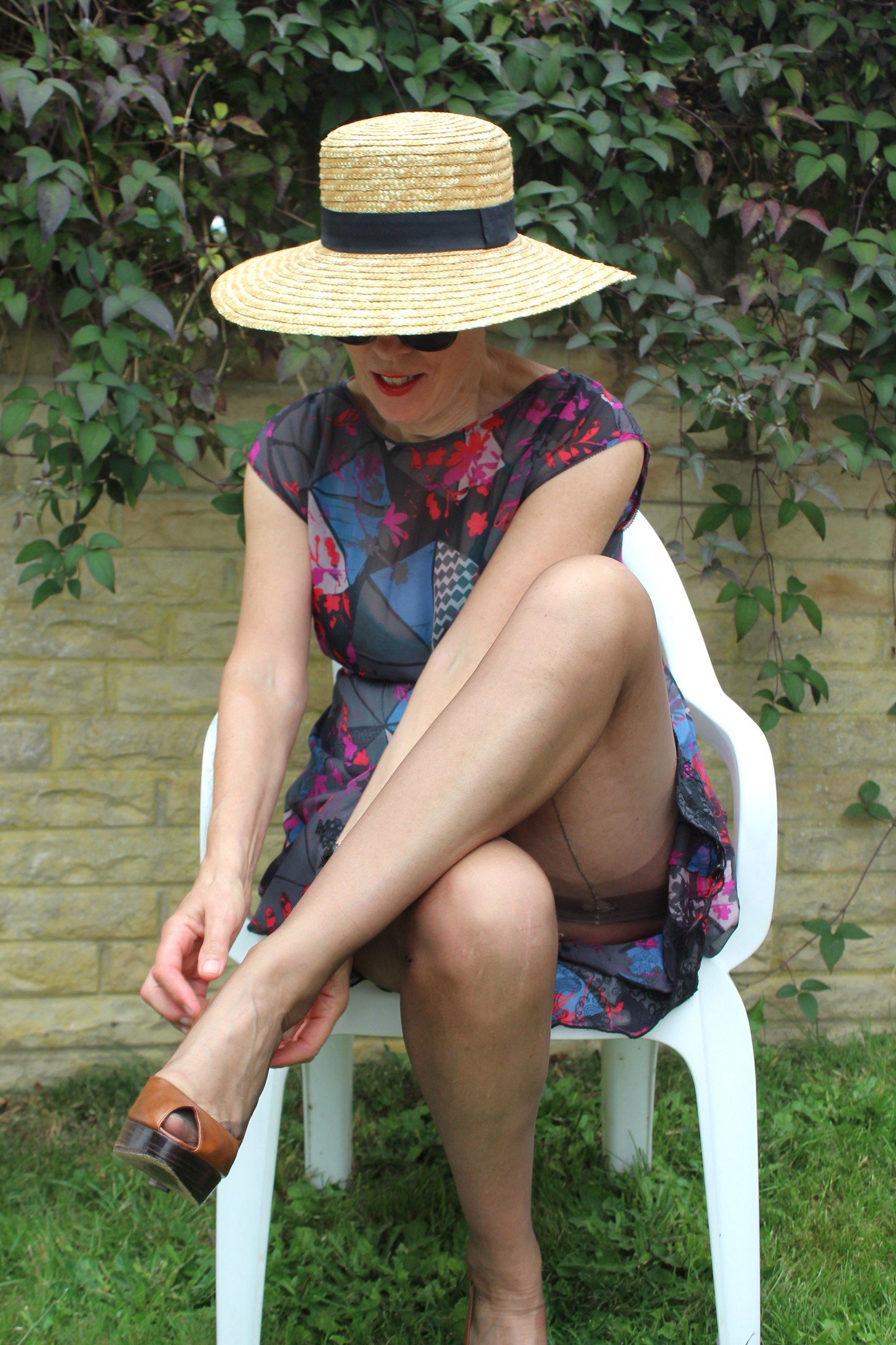
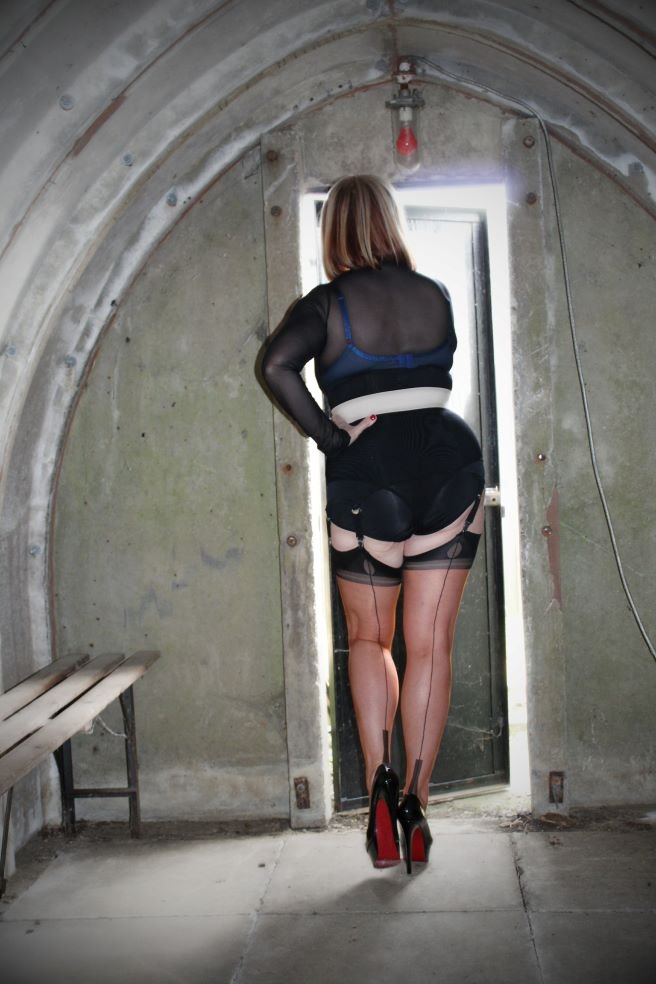
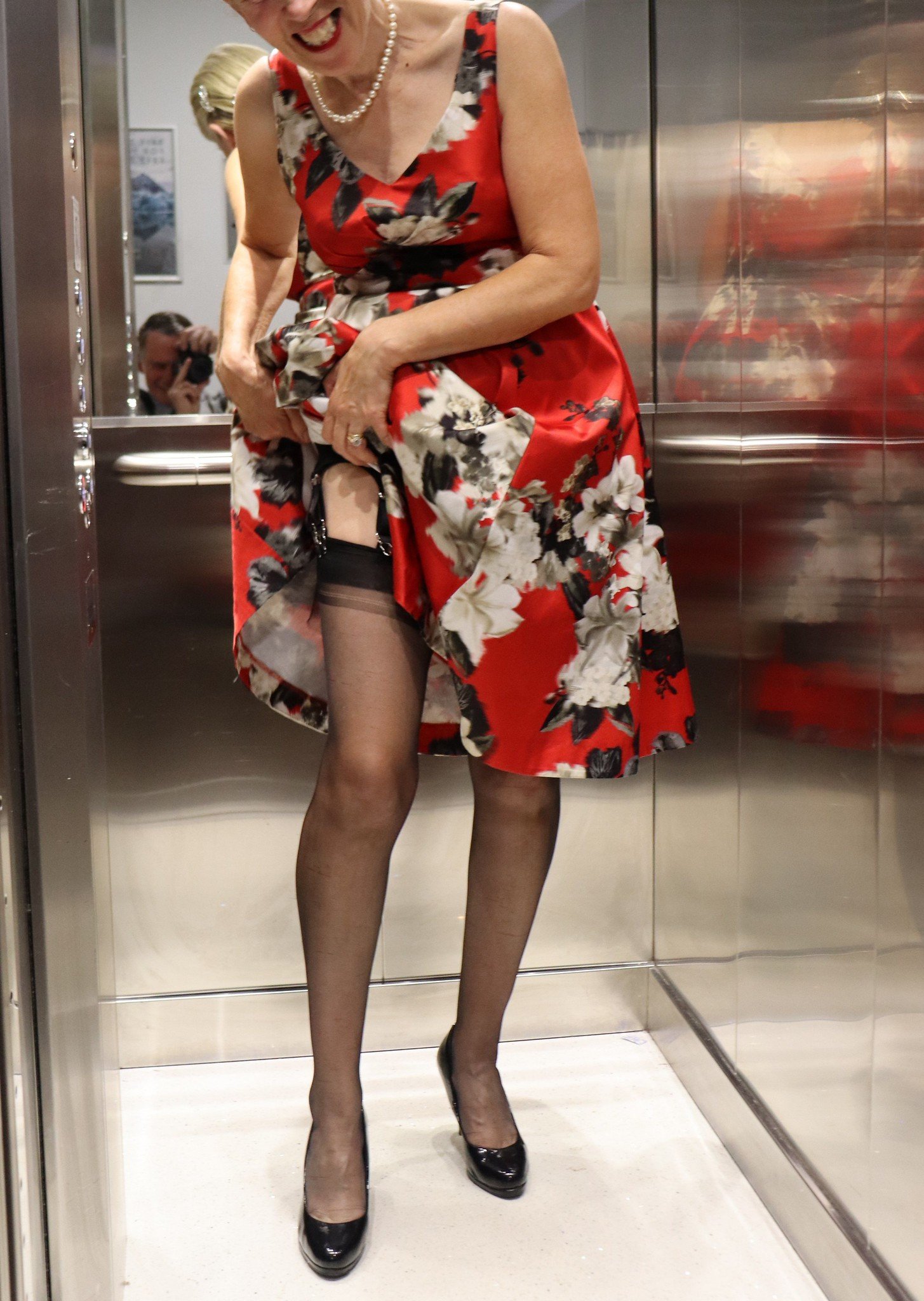
Our thanks, as ever, to the photographers and their muses who offer us pictures each month, a selection of which are shown below.
If you’d like your pictures featured in our monthly gallery, please send them in! We prefer full-resolution images – no need to resize or compress them.

Pour Decisions
Greek Wines: Then and Now
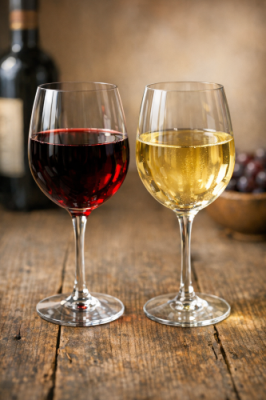
My last article, on sparkling wine, could fairly be described as “after the event”, appearing as it did a few weeks after Christmas and the New Year. So this time, I thought I would try to get ahead of the game and offer some thoughts on wines from a place that instantly conjures up images of sun, sand and holidays. True to form, as I write this the temperature has plummeted to just above freezing, it’s blowing a gale and raining! However, nothing ventured, so here goes.
For those of us of a certain age—and let’s face it, that probably means most H&S members—one of our first adult experiences of a holiday abroad may well have been in Greece. The Greek islands in the late 70s and 80s were cheap, the accommodation often quite basic, but the sunshine was guaranteed. We set off on our SunMed packages expecting to return a fortnight later with some change in our pockets and looking like bronzed gods (or goddesses).
There was just one drawback: the drink. This consisted of a rather depressing mix of Ouzo, Mythos beer and, worst of all, Retsina. The pungent, almost turpentine-like aroma of Retsina is one of my less-than-fond memories of holidays in Greece during the 80s. Everything had to be drunk very cold to make it palatable—at least until about 8pm, after which it often didn’t seem to matter what you were drinking. Whilst our tastes in wine may not have been particularly sophisticated at the time—think Mateus Rosé, Hirondelle and Lutomer Riesling—even by those standards Greek wine was pretty dire.
Well, I have news for you. Greek wine production today is a very different beast. Not only are excellent white, rosé and red wines now being produced, but they are increasingly available in the UK at reasonable prices. Retsina, whilst still around, has been relegated to a minor role—and even then it is far more approachable than it once was, with much less resin dominated.
So how did this transformation come about? Historically, Greece was one of the earliest and most important wine-producing regions in the world. However, the Ottoman period led to a dramatic decline. After independence in 1821, there was little appetite for reviving the industry in a country where growing conditions could be challenging. By 1974, following the fall of the military dictatorship, Greece was one of the poorest countries in Europe. Many young people had fled the harsh regime of the Colonels and, in doing so, had been exposed to a much wider range of wines across Europe—most of which compared very favourably with those at home.
The growth of mass tourism in the 1970s brought an influx of Western Europeans who wanted something better to drink than the traditional offerings. At the same time, improvements in viticulture and winemaking techniques made it possible to turn Greece’s harsh climate to its advantage. Young Greek winemakers, trained abroad, returned with new ideas and ambitions. By the early 1990s, a quiet revolution in Greek wine was underway—and it hasn’t looked back since.
Today, Greece is the 20th largest wine producer in the world. Initially, production was largely for domestic consumption, but the financial crisis of 2008–09 prompted a greater focus on exports. Most UK supermarkets now stock Greek wines, alongside specialist merchants such as The Wine Society.
So how good is Greek wine? Most experts—and I am not one—would say pretty good. Certainly, in Greece itself, the range and quality available is remarkable. Even the humble litre flask of house wine can be excellent value, especially at around €10 a litre.
Of the wines readily available in the UK, I particularly enjoy the following—but as always, the best approach is to explore for yourself. Even on a typical English March day, a promise of Greek sunshine in a glass is hard to resist.
White wines
Two grape varieties worth seeking out are Assyrtiko and Moschofilero. Assyrtiko from Santorini is very highly regarded, though prices reflect this, with bottles often costing £30–£40 or more. It is a dry white, not unlike Chablis. Majestic offers a very good example from Crete at around £14, and Sainsbury’s has one at about £10 that is well worth trying.
The Wine Society’s Moschofilero, “White on Grey”, at around £9, is an excellent, crisp wine—ideal for those warm summer evenings that we can surely expect before too long.
Red wines
Two grape varieties to look out for are Agiorgitiko and Xinomavro. Both M&S and Majestic stock Xinomavro wines that are well worth trying. Typically medium- to full-bodied, with bramble fruit flavours, they are usually priced between £10 and £14.
The Wine Society offers two Agiorgitiko wines at £9.50 and £15, both excellent value. Majestic and Waitrose also carry good examples. Expect flavours of blackberry and cherry, often with a long finish.
Happy drinking,
John
The bedroom bookshelf
I love a good bookshop find, don’t you?
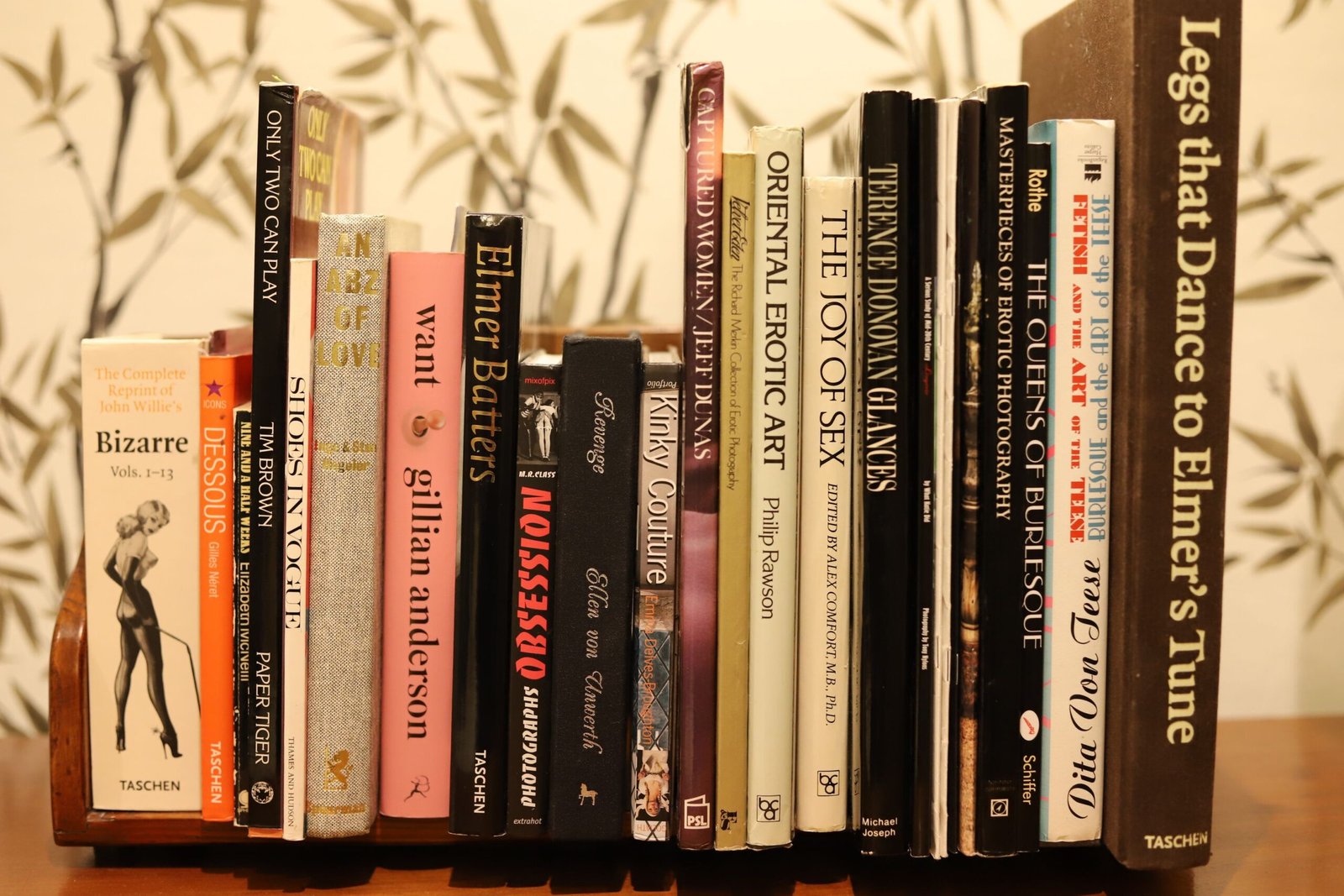
And you, my fellow hedonists, may well have a bedroom bookshelf, as we do — one that can be discreetly covered with a scarf when Granny comes to stay…
Three volumes I particularly want to share with you are:
An ABZ of Love. On a recent trip to our favourite Antiques Centre at Hemswell (well worth a visit if you’re in the area) we noticed an interesting book. In plain grey cloth covers, it’s An ABZ of Love by Inge & Sten Hegeler, published in 1963; a delightfully period tome, with sensible things to say about relationships.

The articles are arranged, as the title suggests, in alphabetical order. Naturally, I made a beeline for Corset and Shoes (wouldn’t you?). It had charming line drawings and informative sections written in a clear, warm and self-deprecating tone.
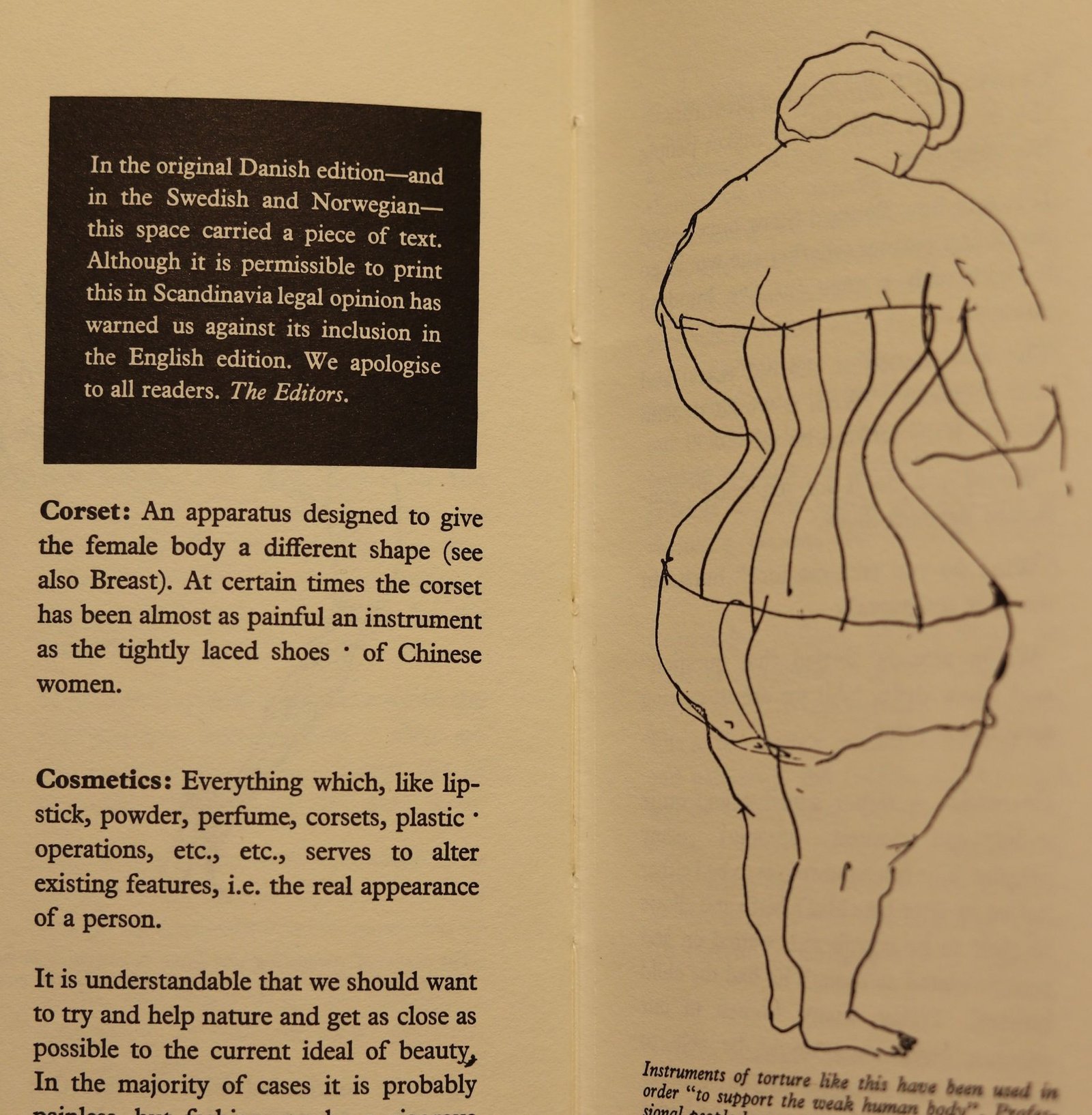
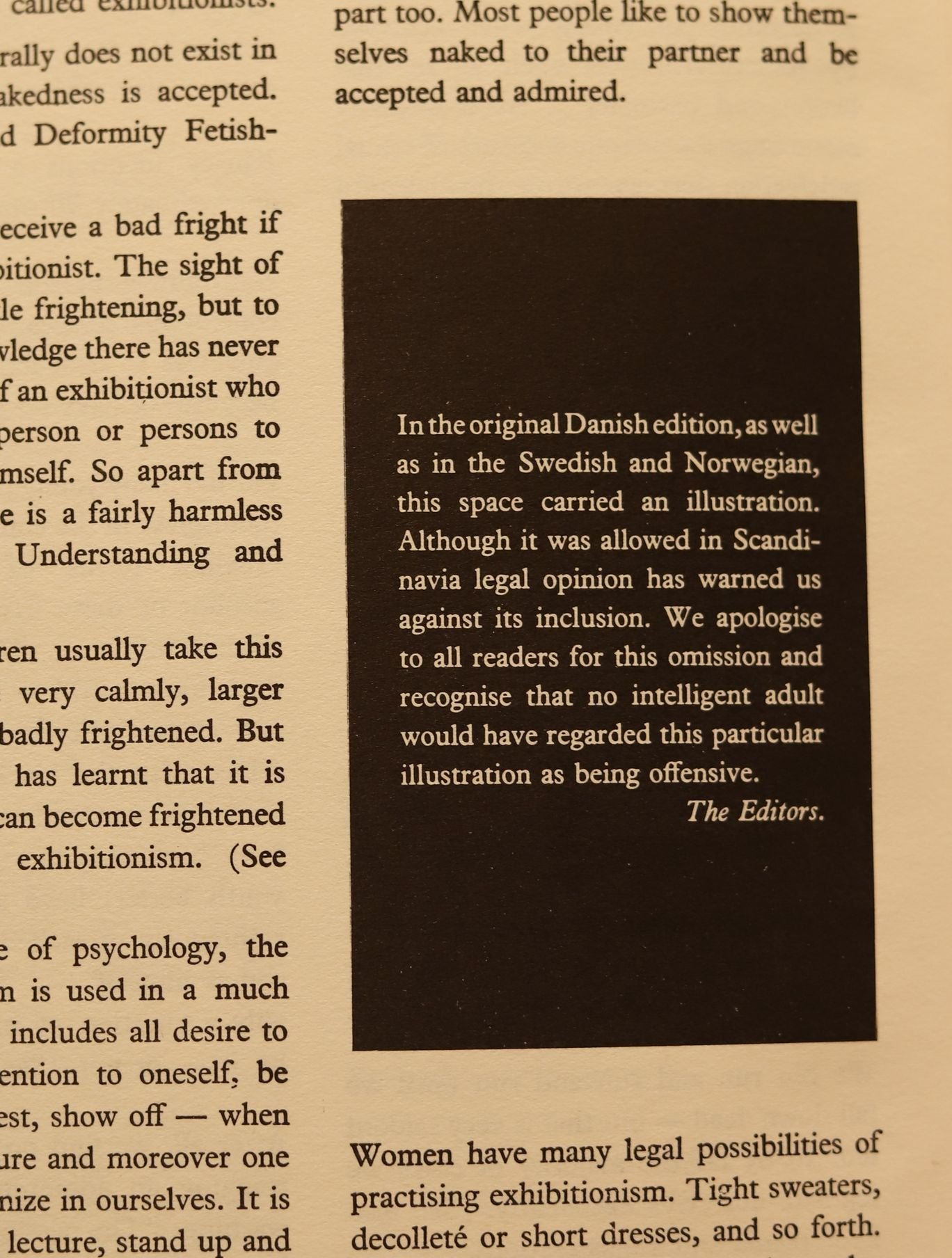
What really tickled me, and led me to purchase it, was the positioning of a black square on the white page, explaining that in the original Danish edition, this space carried an illustration. Although it was allowed in Scandinavia, legal opinion had warned against its inclusion, the black square captioned:
“The editors apologise to all readers for the omission & recognise that no intelligent adult would have regarded this particular illustration as being offensive.“
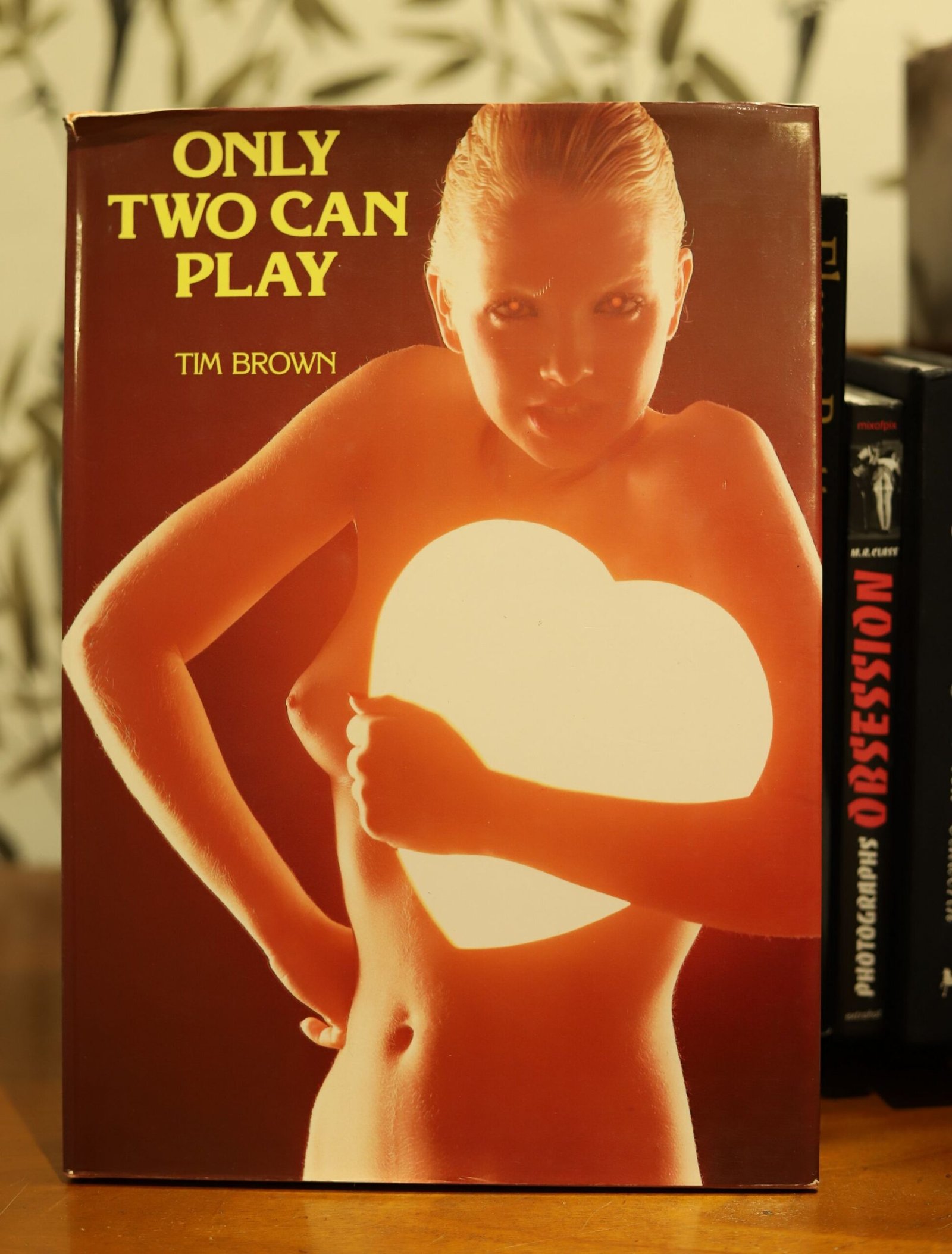
We were lucky to spot another book, Only Two Can Play, by Tim Brown, published 1985. A book of beautiful glamour photographs, with firmly tongue in cheek captions, I thought it was amusing and imaginative. “Imagination is the essence of the game” – quite!
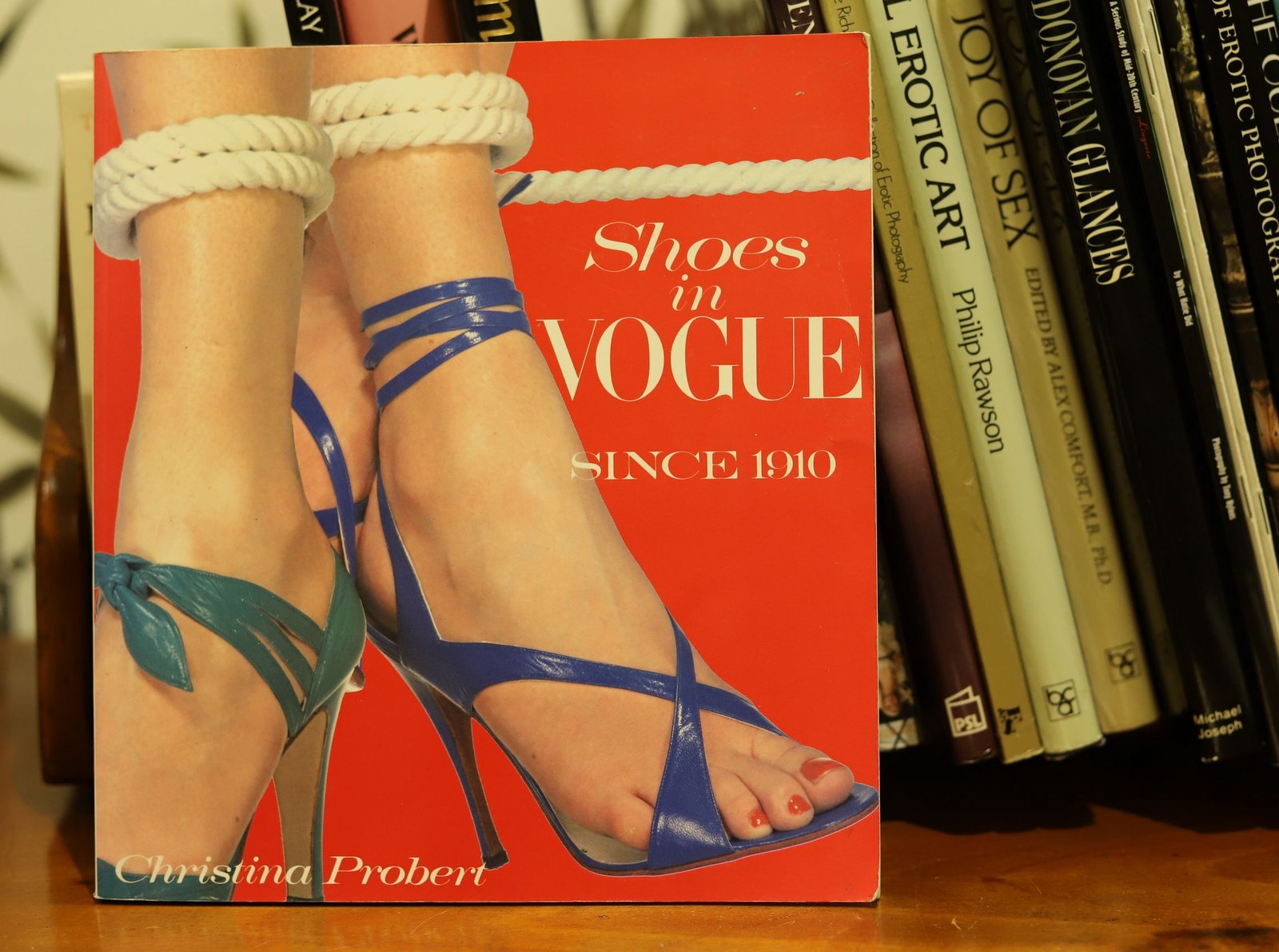
Shoes in Vogue, Christina Probert, published 1981, is perhaps a more specialist area of interest. It offers, to me, a fascinating historical précis of shoe fashion decade by decade, with photos and line drawings.
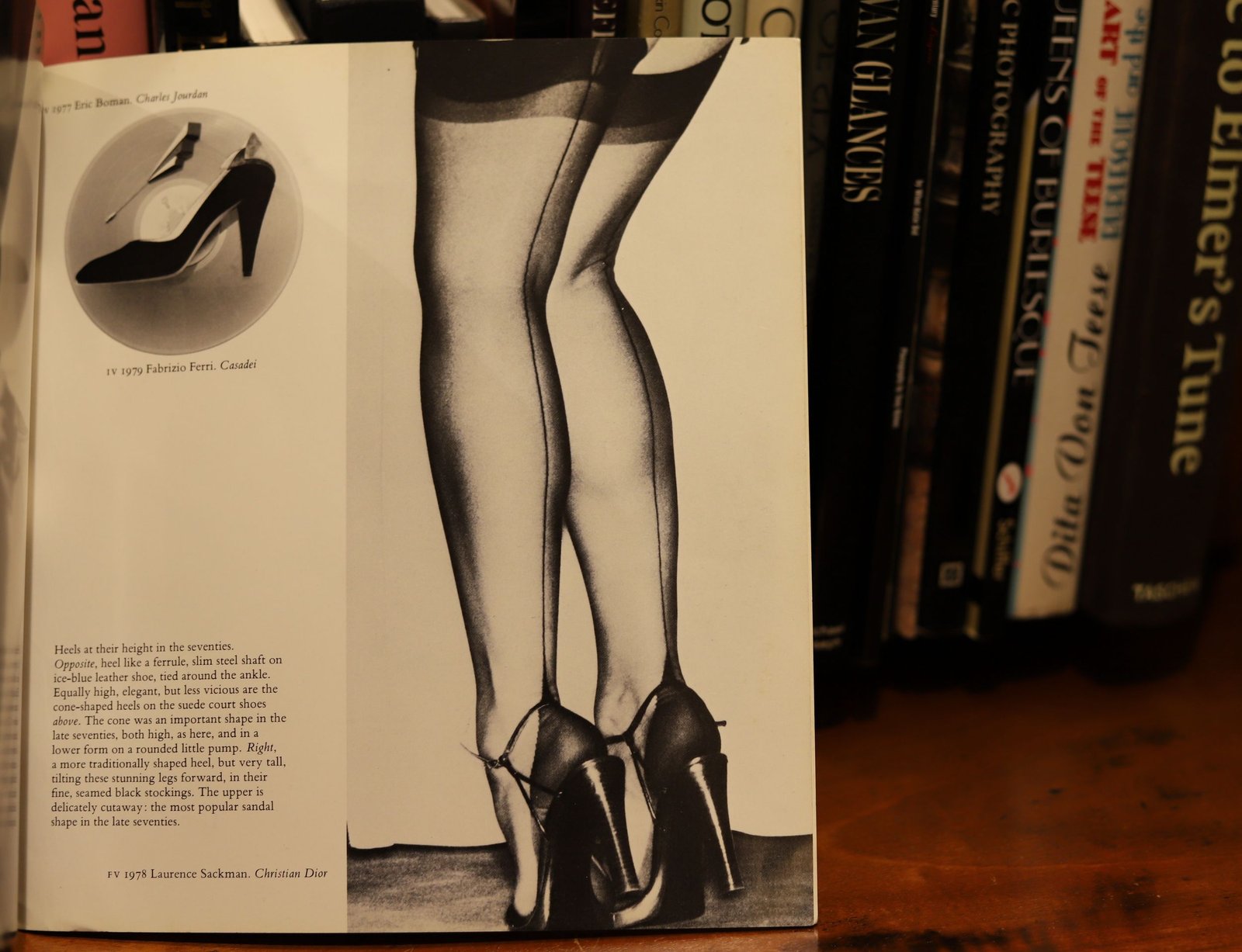
I was particularly amused by the attack on “unsuitable” shoes in 1939- “women who really have taste…do not wear them for walking the city streets”. Leaving unsaid where women of taste do enjoy wearing heels and seams – I couldn’t possibly comment…
Some of the advertisements feature women looking dreamy outside shoe shops. I may even have some snaps of myself in similar pose – some things don’t change, do they?
Jayne x
Photographer of the Month
doré x
This month we’re pleased to welcome a supremely gifted photographer and his beautiful muse, a couple who post on Flickr as doré x.
For those who know their work there, the couple will need no introduction, regularly posting pictures of the highest quality, whilst commenting generously on those posted by others.
Stylish, witty, erotic – and frequently featuring high heels and seamed stockings – their images have been viewed over 40 million times, with more than 10,000 people following their account.
Remarkably – enigmatically – they follow no one…
Q1: When did you first start taking photographs? What interested you at that time?
doré x: We shared a mutual interest in photography from when we first met way back in Sixth Form! It appealed to our creative side and photography was one of the practical study options. Obviously this was in the days before the advent of digital cameras, and we used the college Praktika cameras, which were fully mechanical SLRs with film, being cheap and rugged workhorses. Essentially it was great fun and covered the entire process from the theory onto processing, and this laid the foundations of what turned into a lifelong interest.
Q2: What camera did you use then? When did you first start to use digital cameras?
doré x: Initially we contented ourselves with the use of the college Prakticas. However our journey really began, when quite soon we received a compact Rollei 35 (ideal for street photography) as a birthday gift and then soon after we purchased a Rolleiflex SLR. We stayed loyal to Rollei until the mid eighties when we switched to Nikon, in the shape of an F301. It was a revelation at the time, as it was the first to incorporate a motorised film advance! We didn’t switch to digital until around 2006 with the purchase of a Nikon D70. A watershed development for us as it meant that for the first time we could effectively take unlimited shots, without the inherent cost and limitations of film, together with the pleasure of DIY editing. We have remained primarily with the Nikon ecosystem ever since until the present, currently using the D6 and Z9. This is augmented with a Leica Q3 for street photography.
Q3: What do you most enjoy photographing?
doré x: It can be anything really, from the quite mundane to obviously worthy subject matter, the treasure being archive family shots down through the years, priceless!
In terms of preference and getting our pulses going, it has to be aviation, street, wildlife and portraiture. The more evocative thread to our story is an almost life long passion for stockings and heels started in the late seventies. It is perhaps extraordinary today to think that nylons were then still an item of everyday wear, albeit the utility of tights was rapidly supplanting them. However it was the advent of the digital camera that opened the opportunity for us to begin the next element of this passion and begin to capture the essence of our muse and take photos of Doré.
Our prime influence initially was the sultry aesthetics in the Tinto Brass and early French VMD films of the 1980’s/90’s. Initially we did not show or publish any of our photos, that was until coming across ‘Stockings and Heels’! A web site for like minded individuals who could post their shots for other members to comment on.
The photos very often took the form of progressive sequences, sometimes narrative driven, with a loose storyline or commentary. A great community and unique for it’s time. Upon its demise in around 2016(?) we started posting on Flickr, obviously a very different experience being a world wide site for all photographic genres.
Our main enjoyment derives from putting together capsule wardrobes and being able to undertake a photo shoot on our travels, or occasionally at home. Sometimes we like to combine the spark of such a photo shoot, situationally with another interest be it street photography or transport for example.
Q4: Top tip for shooting a great picture outdoors – and indoors
doré x: Mastering a basic understanding of your camera is always beneficial, although most modern cameras have such excellent auto modes this is not such a barrier.
Light is fundamental and for that reason many of our outdoor shoots are either at dawn or just before dusk. The light is gaining/fading allowing for a more creative and flattering look.
Outside there is very often no need for flash, although this can enhance the look and is vital if shooting into the sun. Indoors again so much depends on lighting levels, so often a flash is essential but not always.
One element that should be considered is using whatever mood lighting is available as opposed to relying on ambient light. If you edit your photos remember it’s always easier to under expose the original and lighten, than over expose and recover blown highlights!
As for composition and cropping etc, this is very much personal taste, just remember not to get caught out inadvertently with mirrors!
Without a doubt the most important element is feeling ‘in the mood’ on both sides of the camera – it is a fun activity. It’s way easier for the photographer, so a high degree of rapport with your partner is key. The best results come when the ‘model’ feels confident and happy.
If shooting outside where communication might be difficult for reasons of discretion and or physical distance, you both need shared signals, denoting things like whether the pose is good, or your partner needs to be closer/further away etc – and also when you have ‘got the shot’. A little preparation goes a long way to coping with the unexpected.
One thing we have learned, when shooting, if the positive energy is missing, and the vibe is off, then either pause for a while, or leave for another time. There are no rigid rules, it’s what works for you.
Q5: Favourite/most useful gadget or accessory – what helps you take great pictures?
doré x: One idea is where your camera has a cold shoe, to utilise a mobile camera mount to give added operational flexibility. We have mentioned the use of flash which can be a game changer, so perhaps augmenting this with a simple off camera flash set up to introduce multiple light sources. This can add a welcome ‘pop’ to many situations.
Not a gadget exactly but mobile phones now carry such excellent cameras with versatile modes that cater for so many situations and allow for spontaneity, especially in diverse settings.
Q6: We ask our guest photographers to share two of their photographs – which two did you pick – and why?
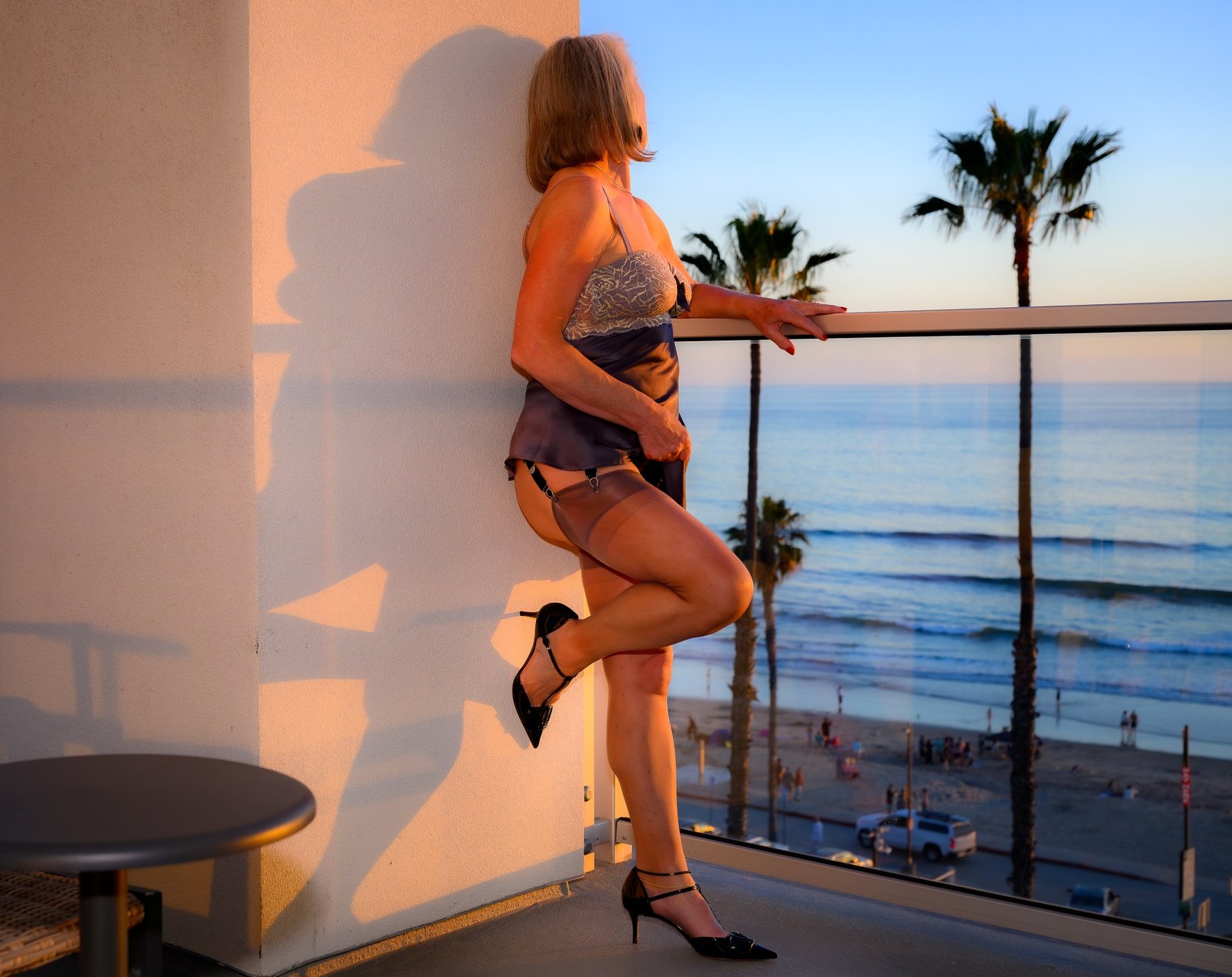
doré x: The first was taken on a very recent holiday when we were staying at a beach front hotel. Being west facing there are great sunsets and so we decided to take a few shots, a typical ‘golden hour’ opportunity.
We could not shoot into the sun to create the classic halo effect, but captured the warm hues and lifted the shadows with a flash.
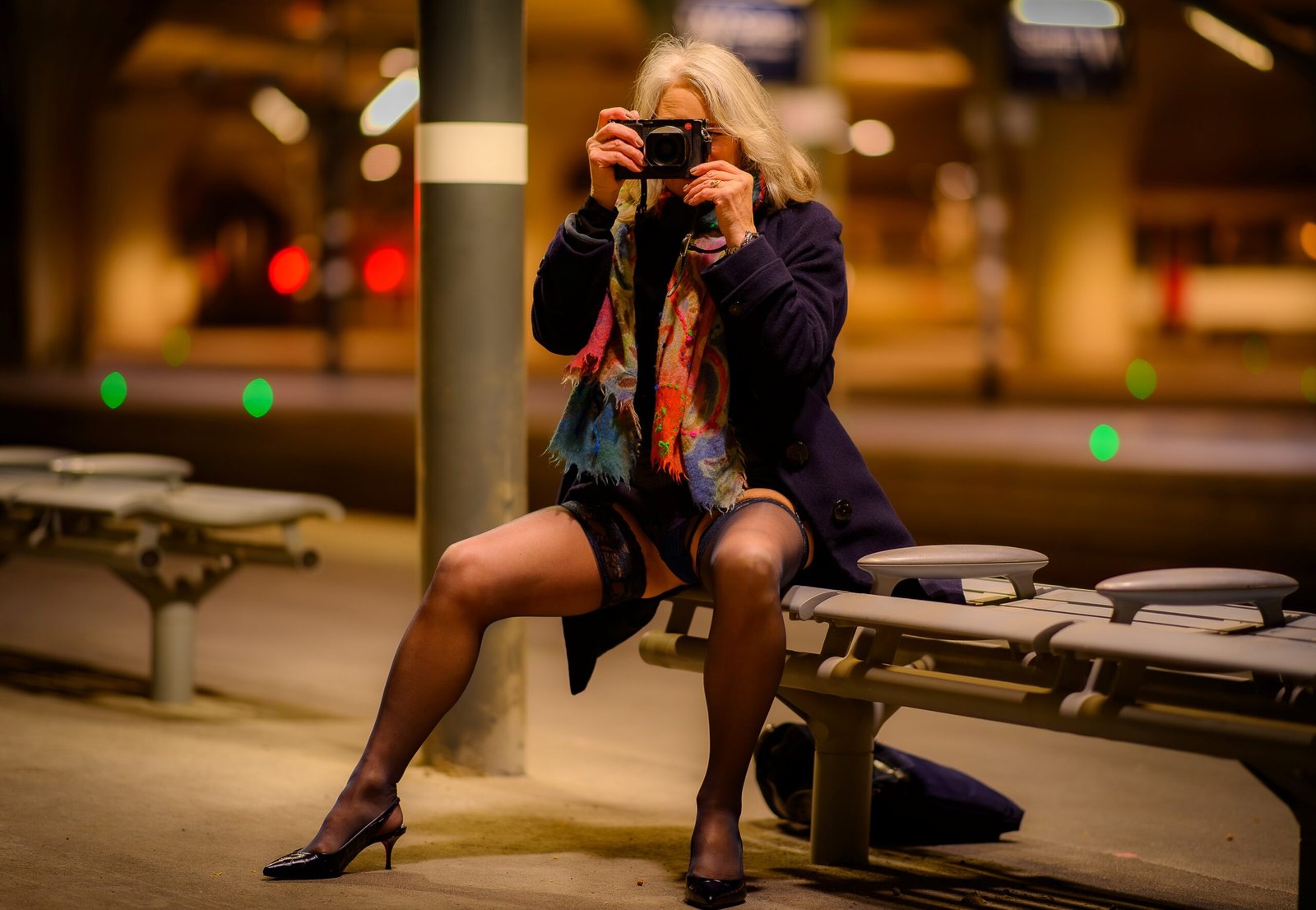
The second was taken street style at the gritty Paris Austerlitz railway station. An everyday setting, but presenting several challenges, the most obvious being other people and the second being low ambient light as part of the station in in an undercroft.
In the interests of being inconspicuous, Mrs D wore boots and changed into heels whilst seated. We would not normally use flash in such a situation, so without killing the mood, this was directed vertically and bounced off the ceiling
Q7: If offered an all-expenses paid assignment, anywhere in the world – where would you go, what would you shoot?
Thrupp and Maberly
the retirement diaries
Our apologies, but activity in the T&M household this month largely consisted of me sitting in front of the laptop for hours on end wrestling the new website into submission, while Jayne did all the jobs I should be doing…

Normal service will, we hope, resume next month (provided she hasn’t left me by then…)